When your hard drive fails you have all the important information like those financial documents and photos that you just cannot replace are lost. You must have options for hard disk drive data recovery. You must store that information somewhere. Generally, on your server hard disk, so it will be placed on your hard drive permanently.
Losing your information forever is the hardest thing to cope with. Microsoft Windows operating system has some basic features to help you maintain your data structures on your disk. You can schedule an automatic de-fragmentation of your hard drives in a month. You can also set this feature to run on RAID configurations which will help with the parity in stripe configuration.
You should place your data on DVDs or CDs for safekeeping. There are other options such as eternal drives in which you can store your data. You can keep printed copies in your file cabinet. If you have a USB drive you can just put that in your pocket.

Now you can try using software application programs for hard disk drive data recovery that are specially designed to protect and retrieve your data. They make many types of software applications and data recovery programs to fit your needs. They cover a wide range of operating systems that are in today's market. You can check Best Buy or even eBay with the latest in data recovery software programs. You can also do a search on Google and find many data recovery companies on the Internet.
Protecting your data from unforeseeable data disasters that you may encounter is important for you. An important aspect of IT professionals’ life, they have to be very protective when it comes to data recovery. If you need help there are data recovery experts everywhere that can assist you in retrieving hard disk drive data recovery.
Tabs
- About Us (1)
- Asp.Net (8)
- C Sharp (7)
- Contact me (1)
- Earn Online (1)
- General News (1)
- IT News (475)
- Motivational SMS (4)
- SQL (1)
- Tricks and Tips (7)
- Trouble Shooting (13)
- VB.Net (10)
My Blog List
-
What is there in ones name! Here is a LOT!13 years ago
Blog Archive
Major market averages fell roughly 2.5% Friday but not everything went down. OPNET Technologies (OPNT) gained 4.7% today in the face of relentless selling in most other stocks. What gives?
Background --
OPNET Technologies, Inc. provides software products and related services for managing networks, servers and applications. The company's products are used to troubleshoot performance problems in production applications and perform capacity planning and design optimization of networks and servers. Products are also used to provide centralized, real-time visibility of network topology, traffic, and status in a single, integrated view and perform modeling of designs and configuration changes. The company also has products that perform some of the same functions but on wireless networks. Finally, OPNET offers consulting and professional services.
Financials --
OPNET is a profitable small-cap that actually pays a dividend, unusual for a tech company of its size. My several measures, it is not inexpensive: PEG is high at 3.61 and the 12 month trailing PE of 63 is definitely at nosebleed levels.
Given the economic backdrop, it's not surprising that trends in revenue and earnings have been lackluster. The company actually suffered losses in the first two quarters of 2009.
On Thursday after the close, however, OPNET reported results for the third quarter of calendar year 2009 (which, if you're interested, is equivalent to the second quarter of their fiscal year 2010). The company recorded earnings per share of $0.09 which soundly trounced analyst expectations of $0.03. Revenue for the quarter was $30.6 million, which compares favorably to the estimate of $28.69 million.
Software license revenue grew 30.9%, or $2.8 million over last quarter, and operating margin went from negative 2.3% to positive 7.2% over the last quarter. The company also ended the quarter with record deferred revenue of $34.9 million.
Though the year-over-year revenue comparison was negative, the solid profit was enough to fire up investors. The chart below shows Friday's nice up-move on strong volume. The stock was on the TradeRadar Swing Signals list as a BUY on Thursday night. I wish I could say all the Swing Signals worked out as well as this one.

Outlook --
Despite a stronger than expected quarter, management remains cautious. OPNET sees Q3 revenues of $30.5-$32.5 million, versus the consensus of $30.3 million. They see Q3 EPS of $0.03-$0.09, versus the consensus of $0.06. The CEO claims to be seeing more normal buying patterns after the previous year where deals dried up or were yanked at the last minute.
The company seems resilient and responsive to changes in the industry and committed to growth through innovation. As an example, with virtualization an increasingly important strategy for more and more corporations, OPNET has introduced a product for troubleshooting application performance problems in virtualized environments.
For those who like to see management put their money where their mouth is, fully 36% of shares are owned by insiders.
Though a player in infrastructure performance management (IPM), the company's primary strength is in application performance management (APM) which, as it turns out, is not the strong suit of their biggest competitors (all known by their initials) BMC, CA, HPQ and IBM. The other competitors are mostly on the same level as OPNET or even smaller so OPNET still has wide open opportunity to grow market share. The company could even be a buy-out target as one of the big four look to shore up their APM product suite.
Conclusion --
As networks and applications grow in complexity, OPNET is there to offer tools that more efficiently identify root causes and potential solutions. As customers routinely seek fast performance and 24/7 availability, OPNET's products provide the ability to monitor in real-time and troubleshoot quickly.
Despite a tough environment OPNET has managed to deliver bottom-line growth. In an improving economy they should do even better. When the current market correction has run its course, OPNET could add to gains.

For as long as I can remember, I have been a fan of Macintosh computers and Apple products. From its sleek design to its user-friendly setup, the Mac is here to stay.
The debate over whether to use a personal computer or a Mac is all about preference.
The advantage of owning a PC is the use of basic programs such as Microsoft Office. However, Macs have all that plus more. Unlike a PC, a Mac is less vulnerable to viruses that will cause the computer to crash or breakdown.
According to edubook.com, Macs focus on the artistic and creative industry, making the use of Adobe software and Photoshop easy. It also increases the competition against your everyday PC.
Even though Macs are considerably more expensive than PCs, you pay for what you get.
If you prefer a PC, then look into what you’re getting into. Every PC catches a virus at one point or another, usually more than one. If you’re ready to face that sort of doom, then get a PC.
But Macs are a good investment. There are little to no virus problems. Even the least expensive Mac is more expensive than a PC, but the way I see it, one should choose quality over quantity any day.
Whether you use your computer for music, work or entertainment, you cannot put a price on something that has such practical value.
Are you familiar with those Apple commercials? Though they’re sometimes exaggerated, they carry some truth.
Apple support and customer care are number one. Apple is right there for you if you are have a problem.
In every Apple retail store, there are “geniuses” that have all of the answers to your questions as well as, provide hands-on technical support for not only Macs, but also for items such as the iPod, Apple TV, and the iPhone. No automated recordings!
The “geniuses” even take care of troubleshooting and actual repairs. I can’t speak much for PCs, but I’ve yet to see a Dell or HP Store.
My first year in college, I was cursed with a PC. If it wasn’t the battery, then it was a virus. If it was not a virus then, it was something else.
If it weren’t for my mother buying me a Mac the next year, than that PC would have been the death of me. My freshman year was so much more stressful as a result of owning a PC.
According to the Apple Web site, the Mac has the world’s most advanced operating system, Mac OS X, and with the recent release of Snow Leopard, it is “finely tuned.” Take THAT, Windows 7!
The better choice for a computer is obviously a Mac. For the Mac users, with all of your wisdom and responsibility, I salute you. PC users, I will continue to pray for you.
Apple’s weathered the economic downturn like almost no other company, pulling in massive profits without having to resort to deep price cuts. But what’s its secret?
Over the past few weeks I’ve been asking a group of Mac/Apple fans why they thought Apple was doing so well. Here are four possible reasons for Apple’s success:
* Constantly improving, innovative product line
Apple doesn’t have a huge product line, but the company is constantly tweaking it. Most of the product updates are well thought out and offer the end user extra value. This is attractive to both new and existing customers.
* Advertising
Apple has a massive ad budget and this allows it to spread the word to a huge audience. When this comes to Macs, this is allowing Apple to aggressively go after those disillusioned PC users. Those funny Mac vs. PC ads are serious business.
* Customer satisfaction
Apple consistently scores very high in customer satisfaction surveys (the company usually tops the list). Happy customers not only re-buy, but tell others that they are happy, therefore generating further sales.
* Vista sucked
Given how Vista was widely considered by many consumers to be a failure, this has handed users over to Apple on a plate. After all, for users who were sick of Vista, or just wanted to give the OS a wide berth, Apple is an obvious choice.
Google now gives users of a subset of Google Voice features if they want to simply use their service without getting a brand new “Google Number”. Mobile phone users can now forward incoming calls to their “Google Voice” mailbox rather than the one hosted by their carrier.
The features available to these users basically includes voicemail, and the ability to make low-priced long distance phone calls, according to the official Google Voice blog.
* Online, searchable voicemail
* Free automated voicemail transcription
* Custom voicemail greetings for different callers
* Email and SMS notifications
* Low-priced international calling
For those of you who want to use Google Voice to its full potential — you’re going to have to take the plunge and get a brand new number. The features, if you choose to go this route, are much more interesting and useful:
* One number that reaches you on all your phones
* SMS via email
* Call screening
* Listen In
* Call recording
* Conference calling
* Call blocking
Once Google fully supports number portability, perhaps they will be able to allow users to simply use one of their existing phone numbers with the full service — but I’m not going to hold my breath for that just yet.
Will you be using the new voicemail service from Google Voice?
There is a common saying that only lawyers or solicitors should get acquainted with different aspects of law, they must be well informed or else the profession may come to an end. Can this be accepted as true? Shouldn’t common people get familiar with the same?
What is Information Technology Act 2000 (ITA-2000)?
Well, if you are living in India and are almost a PC freak, you must remain aware of Information Technology Act 2000 (ITA-2000). It, by and large, is an Act of the Indian Parliament (No 21 of 2000) notified on October 17, 2000. It is worthwhile to mention that the United Nations General Assembly by means of resolution A/RES/51/162, dated the 30 January 1997 did accept the Model Law on Electronic Commerce adopted by the United Nations Commission on International Trade Law. This is referred to as the UNCITRAL Model Law on E-Commerce. What is more the Information technology Act 2000 amendment Bill 2006 has since been passed by the Indian Parliament on December 23, 2008.
Is there any new proposal?
It has to be stated that the Government of India, by now, has proposed major amendments to ITA-2000 in form of the Information Technology (Amendment) Bill, 2006, passed by the Cabinet Committee of the Government of India and are prepared for being placed before the Indian Parliament for discussion.
Nevertheless some substantial developments have taken place in all these years and the bill is known as, at the moment, Information Technology (Amendment) Bill, 2008. Even though some persons try to discern any similarity with the 2006 Bill, it is a totally different Bill and has been approved by the Rajya Sabha and Lok Sabha. Is there any more problem? The Bill is awaiting approval of the President along with the formal notification.
There has been the inclusion of many changes, as already said, and at the same time it does incorporate the recommendations made by the Parliamentary Standing Committee. However there is another problem. In the Indian scenario till the moment a Bill gets finally notified by the Executive it remains a mere Bill. For this reason, till the government of India notifies it, the old Information Technology Act, 2000 would continue to preside over the Indian cyber law.
Has there been any criticism?
What surprises many persons is the dearth of media recognition afforded to the amendment. Apart from this the amendment was passed in 26 minutes the 22nd of December 2008 along with 4 other bills, and another 8 in just 17 minutes the next day. This indicates that there was hardly any debate on what should have been very contentious laws. Even Karnika Seth, renowned cyberlawyer & chairperson of the Cyberlaws Consulting Centre in India, through making a detailed analysis of the recent amendments in the IT Act, 2000 has failed to be optimistic.
And I don’t just mean for geeks. I mean a real, viable alternative to Windows for many users despite the apparent quality of both Windows 7 and Server 2008.
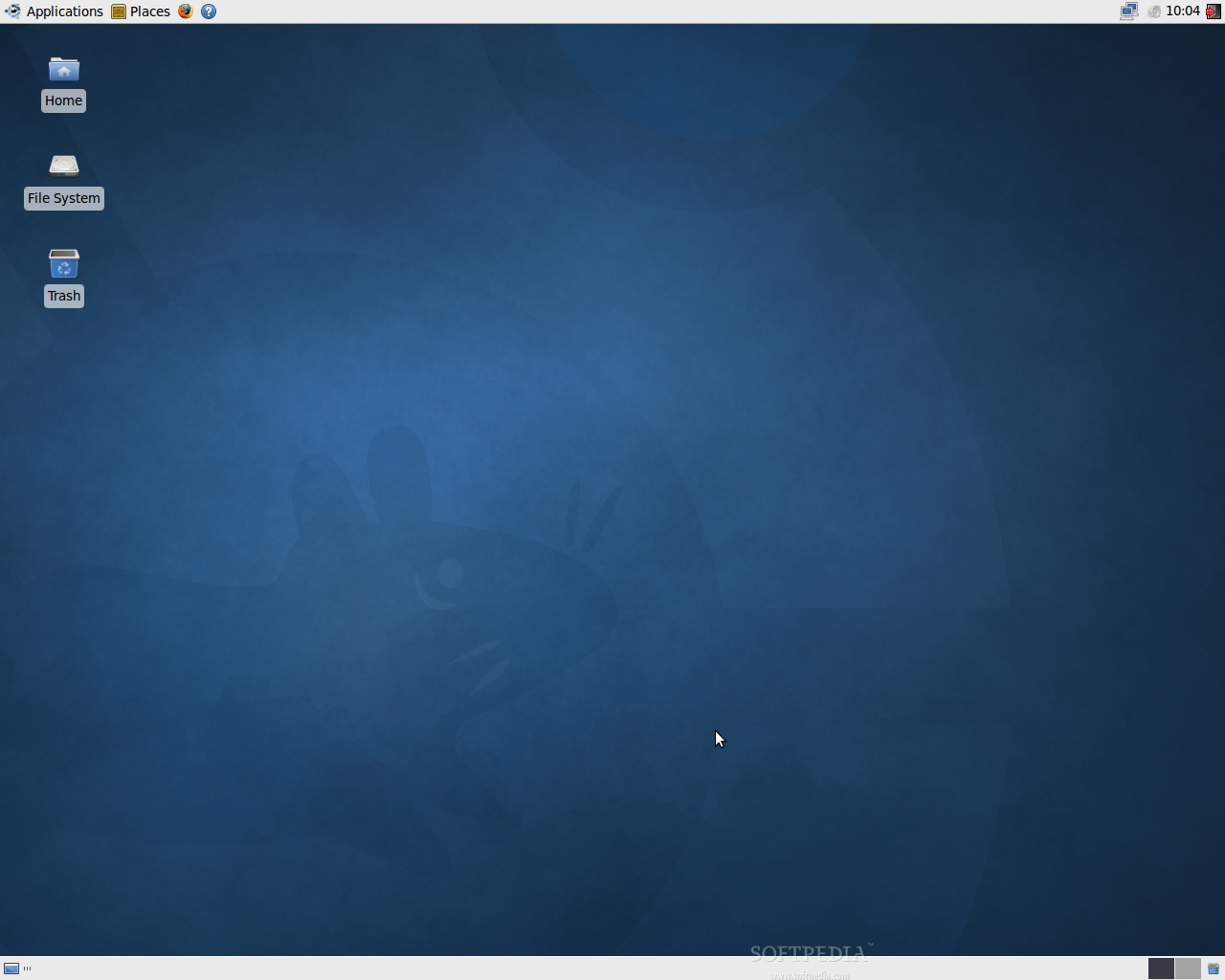
About a year and a half ago, ZDNet’s Adrian Kingsley-Hughes asked, “Is Ubuntu becoming the generic Linux distro?” and concluded that “the evolution of Ubuntu into the generic Linux distro isn’t a bad thing”. Fair enough, but Canonical’s Mark Shuttleworth took this idea a bit farther during a press conference call yesterday:
“We’ve already done a lot of work in developer ecosystem and we’re now increasingly interested in the non-developer consumer ecosystem, so that’s what all the OEM work is about,” Shuttleworth said, declaring that his focus was on “making sure that Ubuntu gets pre-installed and Ubuntu is available from Dell.com and others and making sure that Ubuntu is the default alternative to Windows.”
He didn’t mention Apple, which, to many consumers, is the only alternative to Windows. For all its buzz in the tech world, Linux (or Ubuntu) is hardly a household word. Competing with Apple, though, which already has an impressive ecosystem of hardware and is the reigning king of usability, doesn’t make sense anyway and this ad from Novell would never fly outside of the tech community:
So how can I be so confident that Shuttleworth’s vision of becoming the “default alternative”, and not just the default Linux for those geeky enough to try it, will become a reality? Because he very clearly tied it to a vision of platform. If Ubuntu can work well on every device users encounter (including non-Intel smartbooks and other new classes of portable devices that will be emerging in the next couple of years, displacing notebooks for many consumers), then name recognition will follow.
Obviously, the PC space is dominated by Windows. Yet no matter how spiffy Windows 7 is (and even Shuttleworth acknowledged that it was a good OS, worthy of competing with Ubuntu), Vista taught us all a lesson (consumers and techies alike). There are alternatives to the latest and greatest from Microsoft, even if that’s Windows XP. We don’t have to upgrade.
This “PC space” is changing, though. Windows Mobile stinks. Microsoft has no plans to develop Windows on ARM platforms. The cloud is here, not because of the economy, but because of the value businesses perceive in it. Ubuntu is actively developing in all of these spaces and their latest, highly polished OS (available Thursday) shows off many of the technologies.
What forced Microsoft to crank out it’s best OS in years (some might say it’s best ever and certainly the most stable prior to a service pack or two)? Competition. Competition from Apple, certainly, but also a growing awareness of open source concepts in general. Many artists are releasing DRM-free music (and still making money). Books are widely and freely available. Content is everywhere, much of it for free. Something that you pay for, then, like Windows, better be a heck of a lot better than its free alternatives. Competition is our friend, whether we’re consumers, pro users, or CIOs.
Microsoft may very well continue to dominate the desktop PC space. However, a quick look around at the variety of ways people access online content and cloud-based resources suggests that the importance of the desktop PC as we know it is diminishing. Ubuntu is ready to capitalize on that in ways that the average consumer won’t recognize until he or she finds him or herself using Ubuntu on a MID, a netbook, a kiosk, a phone, a virtualized OS, or a smartbook. Can Apple, Microsoft, or any other Linux distributor say that? Competition might be our friend, but an ubiquitous platform is the friend of developers who can start creating the next generation of killer apps, easily ported to whatever screen we might be using.